Trader Joe’s is owned by a family trust established by Theo Albrecht, one of the two brothers who built the German Aldi grocery business. His side of the family was associated with Aldi Nord, but Trader Joe’s operates independently from it.
The Aldi stores operating in the United States belong to Aldi Süd, the other half of the original Aldi business. Trader Joe’s and Aldi US therefore share family history, but they are not the same company, do not share management and do not operate as two versions of one American grocery chain.
Trader Joe’s at a Glance
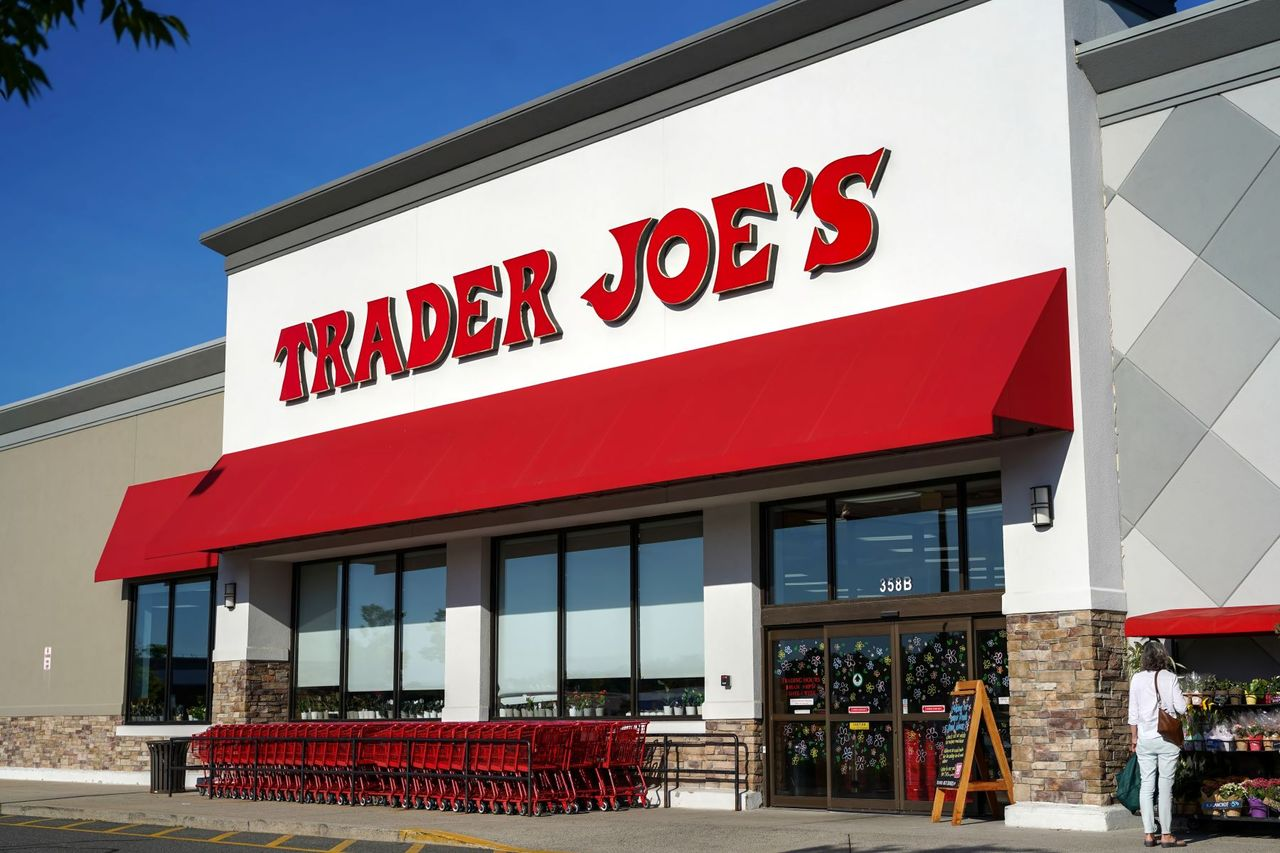
Trader Joe’s is a privately held American grocery chain founded by Joe Coulombe. The first store carrying the Trader Joe’s name opened in Pasadena, California, in 1967, and the company is now headquartered in Monrovia, California. Bryan Palbaum is its chairman and chief executive, while Jon Basalone serves as president and vice chief executive.
The company operates hundreds of stores across the United States but uses a smaller format than most full-service supermarkets. Its shops concentrate on private-label food, frozen meals, snacks, beverages, seasonal products, fresh groceries and a limited range of household goods.
| Company detail | Trader Joe’s |
| Founder | Joe Coulombe |
| First branded store | Pasadena, California, in 1967 |
| Headquarters | Monrovia, California |
| Ownership | Theo Albrecht family trust |
| Company status | Privately held |
| Current CEO | Bryan Palbaum |
| Main retail model | Curated private-label groceries in smaller neighbourhood stores |
Trader Joe’s calls its locations neighbourhood grocery stores rather than supermarkets. That description reflects the size of the shops, the limited assortment and the effort to adapt signs and artwork to local communities.
Before Trader Joe’s
Trader Joe’s began with a group of Southern California convenience stores called Pronto Markets. Joe Coulombe started managing the concept in the late 1950s while working for the Rexall drugstore business and later acquired the stores when Rexall decided to leave the project.
Pronto Markets followed the standard convenience-store model: small locations, extended opening hours and a basic selection of frequently purchased goods. Coulombe became concerned that the business was too similar to 7-Eleven, which had greater scale, stronger purchasing power and a growing store network.
Competing directly would have required Pronto to win on convenience and location count, two areas in which it had no clear advantage. Coulombe instead redesigned the business for customers whose needs were not being served by conventional convenience stores or supermarkets.
He identified a growing audience of educated but budget-conscious consumers who were interested in wine, international travel and unfamiliar foods. Coulombe later described his ideal customer as “overeducated and underpaid,” a phrase that captured the balance between adventurous taste and price awareness.
A New Grocery Concept
The first Trader Joe’s opened in Pasadena in 1967. Coulombe replaced the Pronto identity with a South Seas-inspired theme influenced by California’s interest in tiki culture and international travel.
Employees became crew members, assistant managers became mates, and store managers became captains. Hawaiian-style shirts, maritime decorations and hand-drawn signs supported the theme without changing the basic purpose of the store.
Early locations were different from the Trader Joe’s stores operating today. They carried wine, cheese, coffee, imported food, books, records and speciality products that were difficult to find in ordinary supermarkets. Some locations also used outside operators for meat counters and other fresh-food services.
Coulombe was not trying to build a smaller traditional supermarket. He wanted a store with enough familiar groceries to be useful but enough unusual products to justify a separate visit.
That principle remains central to Trader Joe’s. A customer can buy milk, eggs, bread and produce, but much of the shop is devoted to products that cannot be compared directly with an identical item at another supermarket.
A Deliberately Small Assortment
Large supermarkets may stock tens of thousands of products, including several sizes and brands within one category. Trader Joe’s offers fewer choices and expects each item to justify the shelf space it occupies.
A reduced assortment has practical advantages. Stores require less space, inventory is easier to manage, and the company can concentrate purchasing volume on a smaller number of products. Slow-selling items are also easier to identify.
The same approach changes the customer experience. A shopper choosing pasta sauce may find a few Trader Joe’s options instead of an aisle containing dozens of national brands. This can make the shop faster, but it also means customers may not find a specific brand, package size or dietary variation.
Trader Joe’s is therefore not designed to meet every grocery need. Some households use it as their main food shop, while others visit for frozen meals, snacks, cheese, wine, seasonal products and prepared food before buying household staples elsewhere.
The Private-Label Model
More than 80 per cent of the products sold at Trader Joe’s carry the retailer’s own label. The company works with outside suppliers, but the manufacturer’s name usually does not appear prominently on the packaging.
Private labelling gives Trader Joe’s greater control over product specifications, packaging, quantities and pricing. It also makes the store, rather than the manufacturer, the brand customers remember.
This differs from a conventional supermarket model in which several national manufacturers pay for advertising, promotions and prominent shelf positions. Trader Joe’s says it does not charge suppliers slotting fees for access to shelf space. It asks suppliers to remove costs connected with advertising and in-store placement from the proposed price.
A product must then compete on taste, quality, price and customer demand. The company may source an existing item, request a modified recipe or develop a product around an idea its buying team has found in another market.
The identities of suppliers are generally confidential. A manufacturer may produce products for Trader Joe’s and other retailers, but this does not mean the products are identical. Ingredients, recipes, portion sizes and production standards can differ even when the same factory is involved.
Private labelling also limits direct price comparison. A national-brand product can be compared across several supermarkets using the same name and package size. A Trader Joe’s-exclusive item must be assessed against the closest alternative rather than an exact match.
This does not make Trader Joe’s the cheapest retailer in every category. Its definition of value combines price with quality, convenience and product distinctiveness. Company representatives have described value as what the customer receives for the price, rather than the lowest price alone.
Why Products Disappear
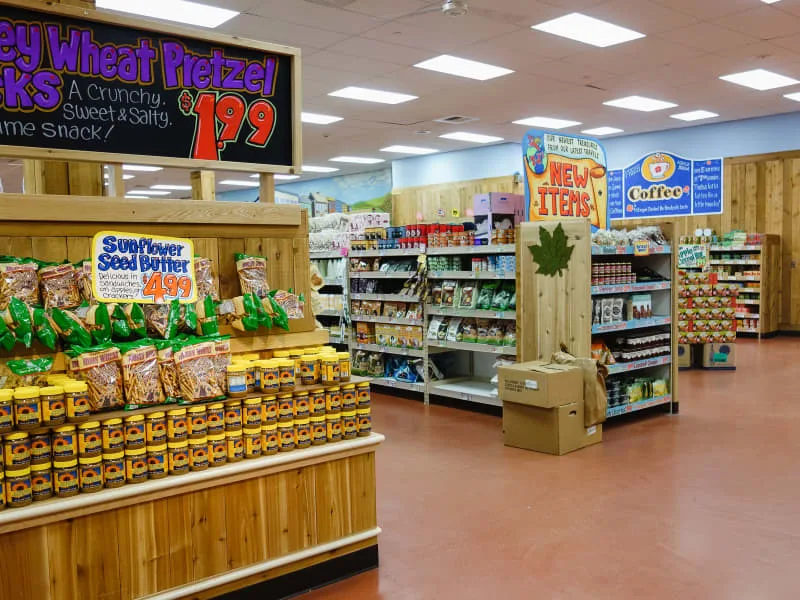
Trader Joe’s frequently discontinues products, including items with loyal customers. The most common reason is insufficient sales across the wider store network. Limited shelf space means a product supported by a small but enthusiastic audience may still be removed if it sells slowly overall.
Other reasons include supplier problems, rising ingredient costs, inconsistent quality and changes that weaken the product’s value. A seasonal product may also disappear simply because its planned selling period has ended.
Products are generally removed when:
● Sales are too low to justify permanent national distribution.
● A supplier can no longer meet the required volume, price or quality.
● Ingredient costs make the product significantly less competitive.
● A new item serves the same purpose and performs better.
● The product depends on a limited harvest or seasonal production run.
● Packaging, regulation or manufacturing conditions have changed.
A tightly controlled assortment cannot grow indefinitely. Removing weaker items creates space for new products without requiring larger stores or more crowded shelves.
Seasonal Products Drive Repeat Visits
Trader Joe’s divides much of its range into regular, seasonal and limited products. Regular items are intended to remain available, seasonal products return during a particular part of the year, and limited items are sold only while a fixed supply lasts.
A limited run may result from a harvest cycle, a holiday, production capacity or an opportunity to purchase a small quantity from a supplier. Some seasonal products later become regular items if demand is strong enough and reliable supply can be arranged.
This rotation gives customers a reason to inspect the shelves rather than buy the same products during every visit. New launches also receive extensive attention from independent social media accounts and product-review communities.
The approach creates demand without a large advertising campaign, but it can also frustrate customers. A popular item may sell out quickly, remain unavailable for months or never return.
The 1979 Sale
In 1979, Joe Coulombe and his employees sold Trader Joe’s to a family trust established by Theo Albrecht. Employees reportedly held 45 per cent of the business at the time.
Theo Albrecht was one of the two brothers behind Aldi. He was associated with Aldi Nord, the northern half of the German grocery business created after the brothers divided their operations.
The acquisition did not result in Trader Joe’s being converted into an Aldi chain. Coulombe remained involved for nearly another decade, and the company continued using its existing name, products and store format.
Preserving the concept made commercial sense. Trader Joe’s already had a defined audience and a retail identity that was difficult to reproduce. Rebranding the stores would have removed much of the value that Albrecht had purchased.
The price of the transaction was not publicly disclosed. Trader Joe’s has remained privately held, so it does not publish the level of financial and ownership information required from a listed company. Consumers also cannot purchase Trader Joe’s shares through a stock exchange.
Why Aldi Has Two Sides
Aldi began with an Albrecht family grocery store in Essen, Germany. Brothers Karl and Theo Albrecht expanded the business after the Second World War using a discount model based on a small assortment, low operating costs and the removal of poorly selling products.
The brothers divided the business in 1961, creating Aldi Süd and Aldi Nord. The two groups remain connected through family history but are legally and economically separate.
Theo Albrecht became associated with Aldi Nord, while Karl Albrecht controlled Aldi Süd. The groups later expanded into different international markets.
Aldi Süd entered the United States in 1976 and operates the Aldi-branded supermarkets found across the country. Theo Albrecht’s family trust bought Trader Joe’s three years later.
| Business | US role |
| Aldi Süd | Operates Aldi-branded supermarkets in the United States |
| Aldi Nord | A separate German grocery group associated with Theo Albrecht |
| Trader Joe’s | US grocery chain owned through Theo Albrecht’s family interests |
| Aldi US and Trader Joe’s | Separate businesses with no shared operation or ownership relationship |
Trader Joe’s states that it and Aldi Nord operate independently. It also confirms that it has no business or ownership relationship with Aldi Süd, including Aldi US.
Trader Joe’s and Aldi US Compared
The two retailers share some operating principles. Both depend heavily on private labels, offer fewer products than large supermarkets and use concentrated purchasing to control costs.
Their customer propositions are different. Aldi US is built around efficient access to low-priced groceries and household essentials. Trader Joe’s combines everyday items with speciality products, prepared meals and frequent seasonal releases.
| Category | Trader Joe’s | Aldi US |
| Ownership connection | Theo Albrecht family interests | Aldi Süd |
| Store format | Small neighbourhood grocery store | Discount supermarket |
| Product focus | Speciality, seasonal and prepared foods alongside essentials | Everyday groceries and household goods |
| Private-label strategy | Mostly uses the Trader Joe’s name | Uses several Aldi-exclusive brands |
| Customer experience | Product discovery and staff interaction | Efficient shopping and low prices |
| Relationship | Operates independently | Operates independently |
The similarities come from comparable grocery economics, not shared American management. Aldi uses a restricted assortment mainly to reduce operating costs. Trader Joe’s also benefits from those efficiencies but uses the rotating range to make shopping less predictable.
The chains do not share gift cards, return systems, product catalogues or loyalty accounts. An Aldi purchase cannot be returned to Trader Joe’s, and the presence of a product at one chain does not mean it is available at the other.
Strengths and Limitations
Trader Joe’s is strongest where a conventional supermarket is often weakest. It offers exclusive products, manageable stores and a clear brand identity without requiring customers to choose between dozens of nearly identical items.
Its staff model also supports the store experience. Employees move between stocking, checkout and customer assistance, while the captain, mate and crew terminology maintains the nautical structure introduced by Coulombe.
The limited assortment creates several weaknesses. Customers may need another supermarket for particular brands, specialist dietary products or larger package sizes. Seasonal items may sell out, and popular regular products can be discontinued.
Store locations can also become crowded because the company often works within smaller properties. Trader Joe’s has acknowledged that available buildings and neighbourhood conditions can influence store design and parking.
These limitations are closely connected to the company’s strengths. A broader permanent range would provide more choice, but it would also require more space and weaken the tightly edited product model.
Common Ownership Myths
Several claims about Trader Joe’s continue to circulate because the Aldi relationship is often compressed into a single sentence.
● Aldi US does not own Trader Joe’s. Aldi US belongs to Aldi Süd, while Trader Joe’s ownership traces to Theo Albrecht’s family trust.
● Aldi did not create Trader Joe’s. Joe Coulombe opened the first Trader Joe’s in 1967, twelve years before the Albrecht acquisition.
● Trader Joe’s is not an American Aldi format. The companies have separate leadership, products, stores and customer policies.
● Their private-label products are not automatically identical. Similar ingredients or suppliers do not prove that the recipes and specifications are the same.
● Trader Joe’s is not a franchise. Its stores operate within the company’s own network rather than under local franchise owners.
● Trader Joe’s has no publicly traded stock. Its shares are privately held and cannot be purchased on a public exchange.
Final Verdict
Trader Joe’s is owned through a family trust established by Theo Albrecht, the Aldi co-founder associated with Aldi Nord. The Aldi stores operating in the United States belong to Aldi Süd, a legally and economically separate business.
Trader Joe’s existed for twelve years before the 1979 sale. Joe Coulombe created its name, customer focus and nautical store identity, while the Albrecht ownership preserved the concept rather than replacing it with an Aldi format.
The two chains still share several retail principles, particularly private labels, limited assortments and cost control. They apply those principles differently. Aldi US concentrates on efficient discount grocery shopping, while Trader Joe’s uses a selective and frequently changing range to sell products that are difficult to find elsewhere.
The accurate answer is therefore more specific than “Aldi owns Trader Joe’s.” Trader Joe’s belongs to the Albrecht family ownership structure linked with Aldi Nord, but it is independently operated and has no ownership relationship with Aldi Süd or Aldi US.