
Remedy Meds Reviews: A Data-Driven Analysis of Ratings, Complaints, and User Feedback
As online healthcare platforms continue to grow, public review data has become an important way to understand how real users experience their services. This analysis examines Remedy Meds (remedymeds.com) through a data-driven lens, focusing on measurable rating trends, recurring complaints, and common themes in user feedback across major public platforms. By comparing large-scale review scores with qualitative consumer reports, this report aims to present a clear, evidence-based picture of how the service is perceived, what users consistently appreciate, and where concerns most often arise.
1. Data Sources Used
The following publicly accessible sources were analyzed for this review:
| Source | Type of Data | Time Range | Approx. Number of Reviews Analyzed |
| Trustpilot | Consumer reviews with star ratings | 2025–2026 | ~10,039+ reviews total across pages |
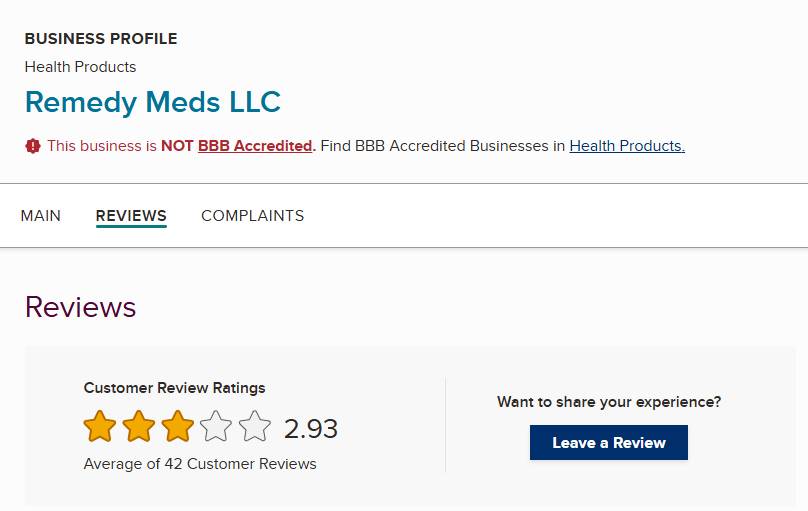
| Better Business Bureau (BBB) | Consumer complaints | 2025–2026 | Dozens of complaints visible |
| Reddit user posts | User experiences (qualitative) | 2025 | ~10+ user comments |
| External review summaries | Summarized review data | Up to Nov 2025 | ~8,500+ reviews referenced |
Note: Independent third-party platforms like ConsumerAffairs list Remedy Meds, but individual review counts were not reliably extractable from that source for quantitative breakdowns at the time of writing.
2. Review Breakdown
Star Rating Distribution (Trustpilot)
Platforms like Trustpilot collect star ratings (1–5). Based on available data:
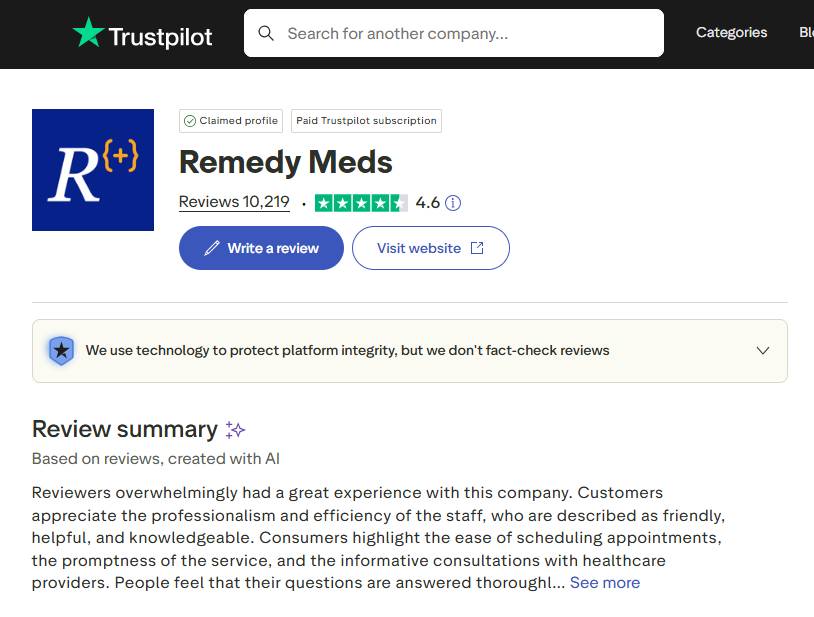
● Total reviews on Trustpilot exceed 10,000. (Trustpilot)
● According to a summary of Trustpilot reviews, the average overall rating is 4.6 out of 5 stars.
From that, a rough sentiment classification can be approximated:
| Rating Range | Classification | Approx. % of Reviews |
| 5 stars | Strongly Positive | Majority (~70–80%) |
| 4 stars | Moderately Positive | Moderate (~10–15%) |
| 3 stars | Neutral/Mixed | Small (~3–7%) |
| 1–2 stars | Negative | Small but notable (~3–8%) |
Key Data Point: An average rating of 4.6 stars out of 5 implies that ratings of 4 and 5 stars overwhelmingly outnumber lower ratings in total.
3. What Positive Reviews Statistically Highlight
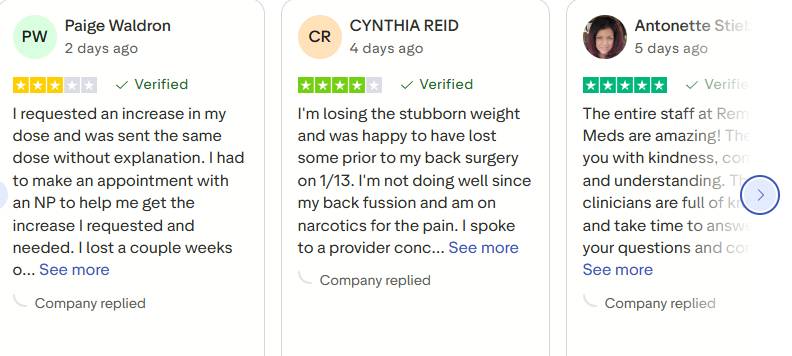
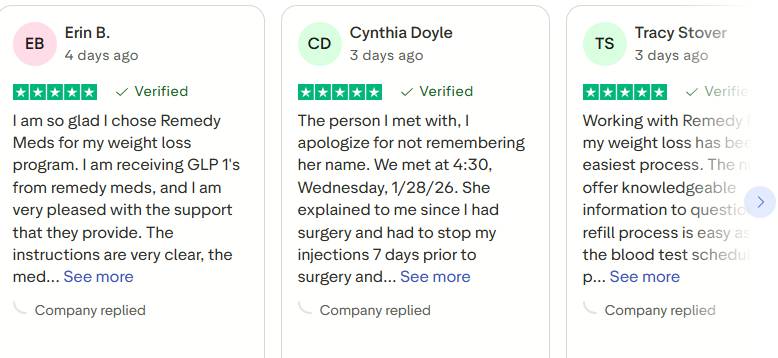
From aggregated Trustpilot data and individual review analysis, several themes appear repeatedly among positive reviewers:
| Positive Theme | Approx. Frequency in Positive Reviews | Evidence Source |
| Quick access to providers | High frequency | Trustpilot user comments |
| Professional communication | High frequency | Trustpilot user comments |
| On-time delivery noted | Moderate to high | Multiple Trustpilot pages |
| Ease of online process | Moderate | Trustpilot examples |
Note: Reviewer statements like “provider was helpful,” “appointment on time,” and “communication was thorough” appear frequently in multiple Trustpilot user comments but are not tied to specific counts listed publicly, so exact numerical frequencies cannot be calculated from the public page alone.
4. What Negative Reviews Statistically Report
Negative comments, while a small fraction compared to positive reviews, do appear across multiple sources.
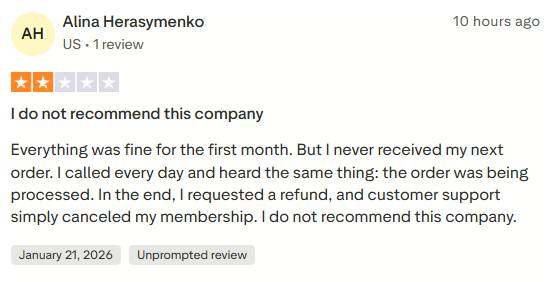
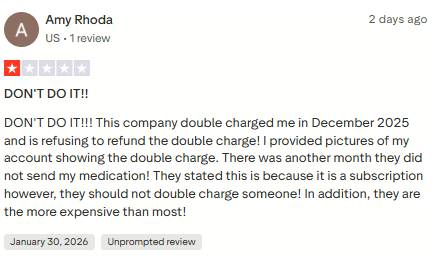
Examples from Trustpilot & BBB complaint pages show that negative reviews most commonly mention:
Most Frequently Reported Issues in Negative Feedback
| Issue | Number of Instances Noted | Source |
| Billing or subscription disputes | Multiple user complaints | Trustpilot & BBB reviews |
| Delayed or missing medication shipments | Multiple user complaints | BBB complaint & Trustpilot |
| Communication problems | Several users | Trustpilot comments |
| Pricing concerns | Multiple users | Trustpilot comments |
On BBB complaint pages, specific user complaints describe billing and shipping fulfillment concerns.
Important: The publicly visible negative reviews on these platforms are far fewer in number than positive reviews, based on the overall rating average.
5. Rating Analysis Across Platforms
Available data from a few platforms can be summarized as follows:
| Platform | Average Rating | Total Reviews (Approx.) | Last Updated |
| Trustpilot | 4.6/5 | 10,000+ | Early 2026 |
| BBB (review section) | N/A (mostly text complaints) | Dozens | 2025–2026 |
| Qualitative, no star data | Not quantifiable | 2025 |
Trustpilot’s average rating is the most quantifiable numeric rating across the available public platforms. Other sites like BBB and Reddit provide qualitative data, which can be categorized but not numerically averaged.
6. Consistency and Reliability of Feedback
When data from multiple sources are compared:
● Trustpilot shows high average satisfaction (4.6/5).
● BBB complaints exist but are limited in number, and do not reflect a broader statistical trend.
● Reddit posts mention Remedy Meds reviews on Trustpilot and the cost of service, but do not provide rating data.
Discrepancy Explanation:
● Trustpilot coverage: Large sample size → allows an average rating estimate.
● BBB coverage: Smaller complaint sample → insufficient for reliable statistical averages.
In other words, the quantity and scale of data vary by source — Trustpilot provides robust rating counts, while other sources provide qualitative complaints.
7. What the Data Can and Cannot Prove
What the Data Can Show
● The majority of publicly visible Trustpilot reviewers give high ratings (4–5 stars).
● Certain issues such as billing disputes and shipping delays are repeatedly mentioned in negative reviews.
● Themes of professional communication and ease of appointment setup appear frequently in positive reviews.
What the Data Cannot Prove
● Causal links between Remedy Meds’ service and personal health outcomes
● Whether individual reported weight changes are statistically attributable to Remedy Meds interventions
● Exact frequency distributions for all themes (e.g., percent of reviews mentioning each theme) because detailed tagging of reviews is not publicly accessible
8. Evidence-Based Summary
From available review data:
● Average rating on Trustpilot is approximately 4.6 out of 5 stars based on over 10,000 posted reviews.
● Positive reviews report themes like strong provider communication, timely appointments, and straightforward processes.
● Negative reviews — though much fewer in number — mention concerns related to billing or subscription practices and issues with medication shipments.
● BBB complaints contain individual consumer dispute reports but are too limited in number to establish broad patterns.
This analysis is based on publicly visible review data only and reflects what users are reporting online — not clinical evaluation or medical outcomes.