OnlyWorkMoods.com Review: Broad Content, Empty Categories and Mixed Trust Signals
OnlyWorkMoods.com looks like a work-focused website from its name, but the site itself behaves more like a broad content blog. That difference is the main story. The domain is not a productivity tool, not a mood tracker, and not a workplace platform. It is a multi-topic publishing site with a wide category structure, simple articles, and some visible gaps in editorial depth.
This review looks at how OnlyWorkMoods.com actually works as a content website, how its categories are built, what its writing style suggests, and why readers should treat it as a casual reading source rather than a strong expert publication.
Quick Verdict
OnlyWorkMoods.com is a readable but uneven multi-niche blog. It has a clean enough publishing structure and covers several everyday topics, but its broader identity is not fully supported by its content depth. The site looks like it is trying to build a wide content network across work, business, finance, health, education, lifestyle, fashion, travel, technology, and other topics.
The issue is not that the site covers many areas. The issue is that some categories appear empty, thin, or underdeveloped, while the visible author identity and editorial process do not offer enough trust signals. That makes the website feel more like a search-first publishing project than a mature editorial platform.
For casual reading, OnlyWorkMoods.com can be useful. For serious decisions involving finance, health, law, career, education, or business, readers should verify the information with stronger and more specialized sources.
What OnlyWorkMoods.com Actually Is
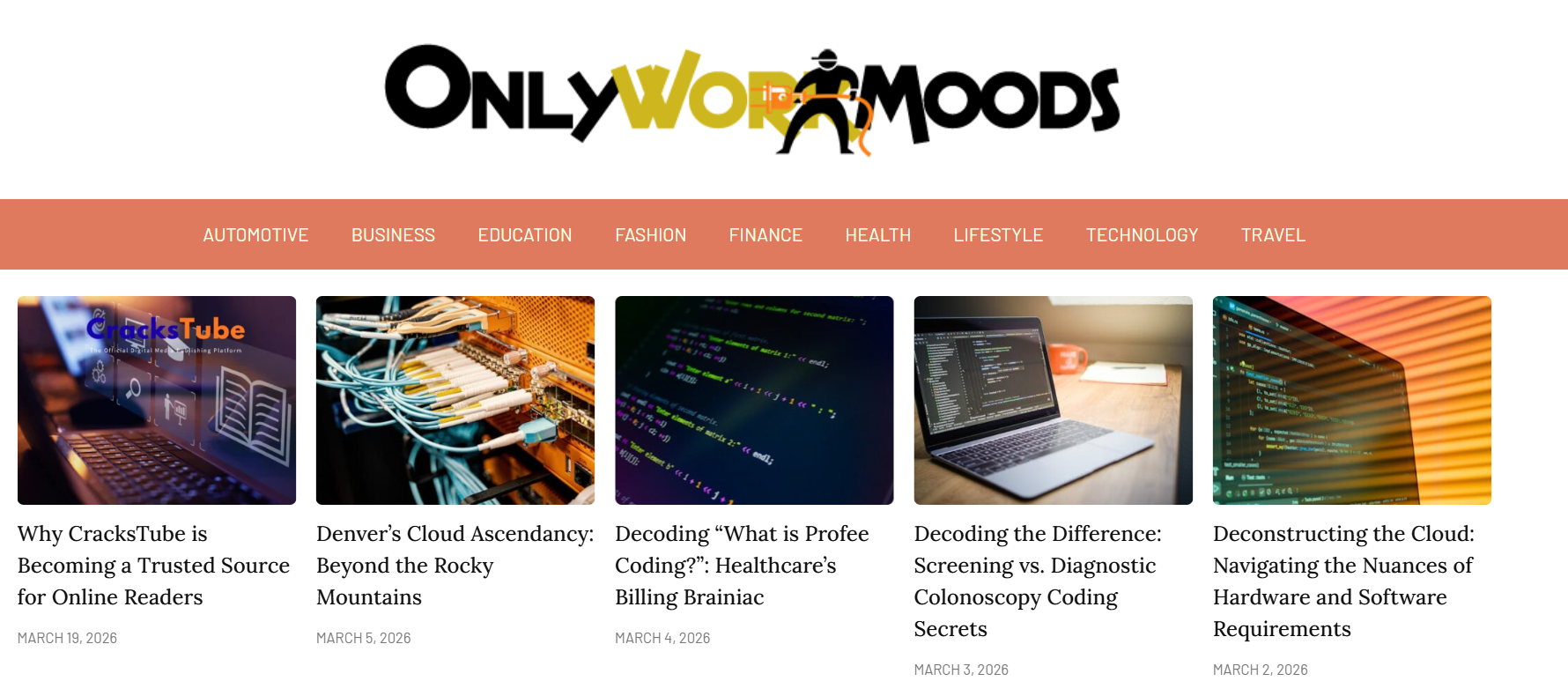
OnlyWorkMoods.com is best understood as a general informational website. It publishes article-style content across different categories instead of offering a product, software tool, community, dashboard, course, or professional service.
The name creates a narrower expectation. “OnlyWorkMoods” sounds like it should focus on work habits, workplace mood, productivity, professional mindset, burnout, remote work, or career balance. But the site’s actual structure appears much wider. It moves across different general-interest categories, which makes it closer to a broad blog than a focused work-life publication.
That distinction matters because readers judge websites based on expectations. A site with a work-focused name may be expected to have deep coverage around productivity, workplace culture, motivation, or modern work. If the same site also stretches into fashion, travel, health, finance, business, and education, it needs stronger editorial organization to make that broad identity feel credible.
OnlyWorkMoods.com does not fail because it is broad. It feels uneven because the breadth is stronger than the visible depth behind it.
The Real Identity: A Search-First Content Domain
OnlyWorkMoods.com does not feel like a narrowly defined publication with one clear editorial lane. It behaves more like a search-first content domain. That means the site appears designed to publish around different topics people may search for, rather than building all content around one strict brand theme.
This is common among multi-niche websites. A domain creates several category areas, then publishes informational articles that can attract search traffic from different reader interests. The model can work, but only if the site builds enough quality, depth, and trust around each topic cluster.
The challenge for OnlyWorkMoods.com is that its identity feels stretched. The name points toward work and mood, but the structure points toward a general blog. The broader the site becomes, the harder it is to prove authority.
A search-first site is not automatically low quality. Many useful websites are planned around search demand. The concern begins when the publishing structure becomes wider than the editorial substance. That is where OnlyWorkMoods.com feels incomplete.
Category Structure: The Main Weak Point
OnlyWorkMoods.com appears to present itself with a broad menu of topics, including areas such as business, finance, health, education, lifestyle, fashion, technology, travel, and other general categories.
That wide structure creates the impression of a large content platform. But some categories appear empty, thin, or not properly developed. Sections such as Fashion, Lifestyle, or similar broad categories may exist in the site structure, yet they do not always appear to have enough visible content to justify their place in the navigation.
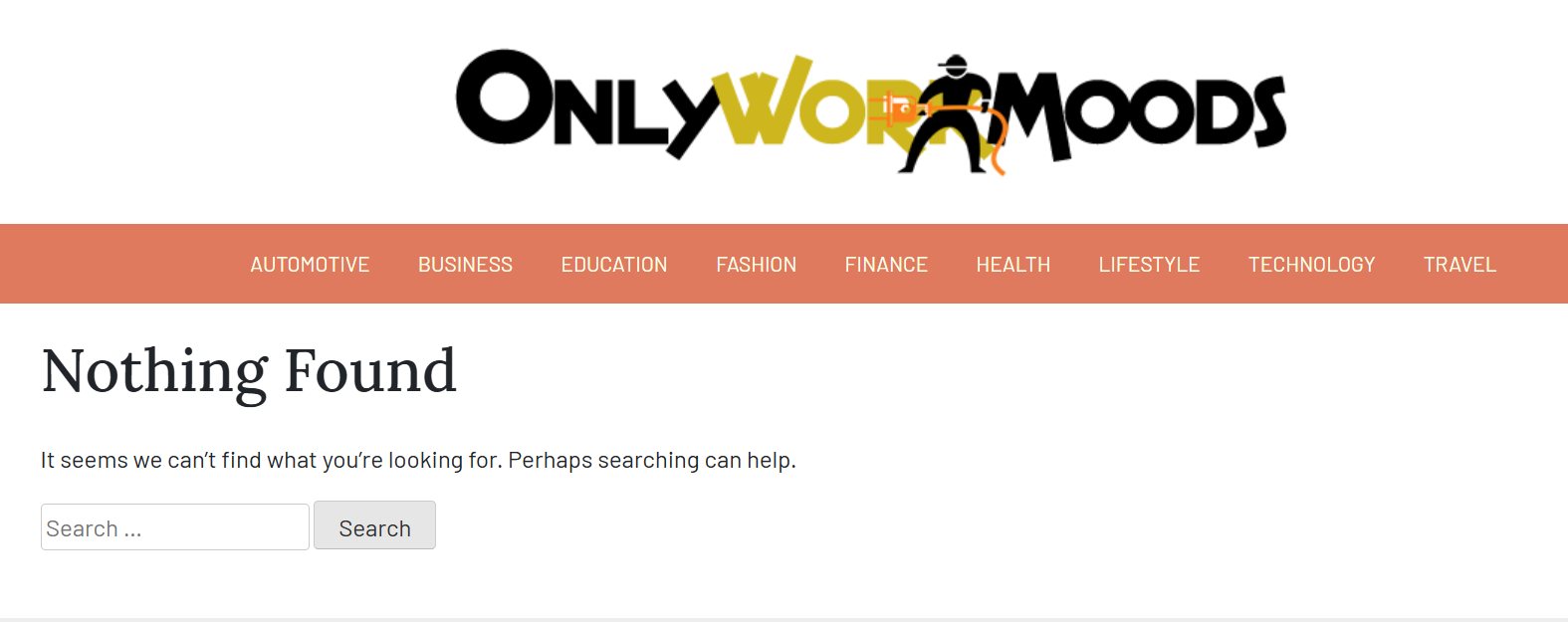
This is not a small issue. Categories are not just menu labels. They are promises. When a website adds a category, it tells readers that the site has something meaningful to offer in that area. If a user clicks a category and finds very little content, the site feels unfinished.
The empty-category issue also changes how readers interpret the domain. A site with a few focused categories can feel intentional. A site with many categories, some of them empty or underdeveloped, can feel like it is preparing for future SEO expansion rather than serving a complete editorial experience today.
| Category Signal | What It Reveals |
| Wide topic categories | The site is trying to operate as a broad content platform. |
| Empty or thin sections | The content library has not fully caught up with the site structure. |
| Fashion and Lifestyle-style categories with little content | Some sections may be placeholders rather than active editorial areas. |
| Many unrelated topic areas | The site appears search-first rather than niche-first. |
| Uneven category depth | The domain feels active in structure but incomplete in substance. |
This does not mean the website is unsafe. It means its publishing maturity is limited. OnlyWorkMoods.com has the frame of a larger content site, but not every section appears developed enough to support that frame.
What the Empty Categories Reveal
Empty or thin categories show that OnlyWorkMoods.com is still building its content structure. In a stronger editorial publication, categories usually grow from existing coverage. The site writes often about a topic first, then organizes that content into a clear section.
OnlyWorkMoods.com appears closer to a search-first content pattern. Its broad category map suggests ambition, but the uneven depth makes the site feel incomplete in some areas. Some sections may be active, while others look like planned content spaces waiting for future articles.
This matters because readers judge more than individual posts. They also judge the overall site structure, author signals, and topic consistency. When categories feel unfinished, the content can seem less authoritative even if the articles are readable. It also makes the brand identity harder to understand, because the site feels partly work-focused but also stretched across many general topics.
Content Style: Easy to Read, But Not Deep Enough
The writing style on OnlyWorkMoods.com appears simple and accessible. That is one of its better qualities. The content seems built for readers who want direct explanations without heavy jargon, dense research, or complicated formatting.
This style works well for casual browsing. A reader looking for a quick overview may find the writing easy to follow. The structure likely uses familiar blog patterns: headings, short explanations, general context, and information presented in a basic way.
The limitation is depth. The site does not strongly show signs of original reporting, expert commentary, case studies, first-hand experience, or source-heavy analysis. The content may answer basic questions, but it does not always appear to build a strong reason for readers to trust it as a primary source.
That makes the writing functional rather than authoritative. It can explain topics, but it does not always feel like expert-led analysis.
The Kevin Byline and Author Transparency
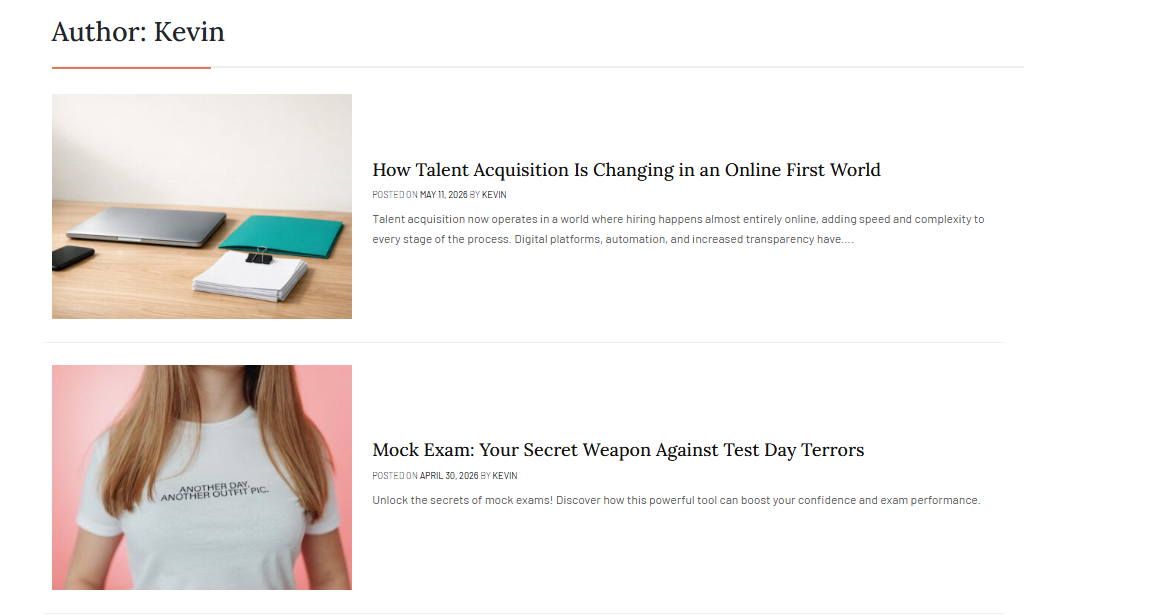
One of the more noticeable editorial signals is the repeated appearance of the author name Kevin across the site. A single visible author name is not automatically a red flag. Many small websites are run by one person, and a single-author blog can still be useful and credible.
The concern is context. If one author name appears across many different categories, readers need to know who that person is, what their role is, and why they are qualified to cover such a wide range of subjects. This becomes more important when the site covers areas like finance, health, business, education, and legal-adjacent topics.
A byline should add trust. If the byline only gives a name without a detailed author profile, professional background, editorial role, or subject experience, it does not do enough to support credibility.
The repeated Kevin byline should be described carefully. It is not proof of low quality or fake authorship. It is a transparency gap. The site gives readers a name, but not enough information to understand the authority behind that name.
E-E-A-T Analysis
E-E-A-T stands for experience, expertise, authoritativeness, and trustworthiness. For a site like OnlyWorkMoods.com, this matters because the domain covers multiple topics that can influence practical decisions.
The site has some basic trust structure. It appears to have standard website pages and a normal blog format. But the deeper E-E-A-T signals are not especially strong.
| E-E-A-T Area | What the Site Shows | Assessment |
| Experience | Limited visible first-hand testing, examples, or original reporting | Weak to moderate |
| Expertise | Repeated author name with limited visible background | Weak |
| Authoritativeness | Broad categories, but uneven topic depth | Low to moderate |
| Trustworthiness | Basic site structure, but limited editorial transparency | Moderate for casual reading |
The strongest concern is not readability. It is proof. Readers need proof that the site has the experience, sourcing, and editorial process needed to cover broad topics responsibly.
For lifestyle or general reading, the trust requirement is lower. For finance, health, legal, education, and career topics, the trust requirement is much higher. OnlyWorkMoods.com does not currently feel strong enough to be treated as a final authority in those areas.
Publishing Consistency: Active Structure, Uneven Direction
Publishing consistency is not only about how often a website posts. It is also about whether the website has a clear content pattern. OnlyWorkMoods.com appears to have an active structure, but the editorial direction feels scattered.
A focused site usually builds repeated authority in a small group of related subjects. For example, a workplace site may publish consistently about productivity, career development, remote work, workplace wellness, and professional tools. A finance site may focus on budgeting, credit, investing, and financial planning.
OnlyWorkMoods.com appears broader than that. Its category structure suggests multiple unrelated content lanes. This can make the website feel larger, but it also makes it harder to understand what the domain is known for.
The empty or thin categories make this issue more visible. They show that the site may be trying to cover many areas before all of those areas have enough content. That gives the website a mixed publishing signal: active in ambition, but uneven in execution.
Claim vs Reality
The best way to understand OnlyWorkMoods.com is to compare the impression it creates with the experience readers may have.
| Site Impression | Reader Reality |
| The name suggests a work-focused website. | The content structure appears much broader than work or productivity. |
| The menu suggests a multi-category publication. | Some categories appear empty or underdeveloped. |
| The site looks like a general editorial platform. | Author transparency and sourcing signals feel limited. |
| The articles are readable and accessible. | The depth appears better suited for casual reading than expert research. |
| The broad structure suggests authority across many topics. | The site has not fully built visible authority in every category. |
This gap does not make the website bad. It makes it important to judge the site realistically. OnlyWorkMoods.com should be read as a developing content domain, not a fully mature authority site.
What Works Well
OnlyWorkMoods.com has some positive qualities. The site is easy to understand, and the content style appears approachable. Readers who want simple explanations may find it useful for quick browsing.
The broad category structure may also help casual readers discover different topics in one place. Someone looking for light information around work, money, lifestyle, business, or general topics may find value in the site’s simple blog format.
The site also appears to function as an open informational website. It does not seem to require readers to sign up just to access basic content. That makes the reading experience straightforward.
The best use case is light reading. OnlyWorkMoods.com works better when readers treat it as a starting point rather than a final source.
Where It Feels Weak
The biggest weakness is the mismatch between the site’s structure and its depth. A broad menu can make a website look established, but empty or thin categories weaken that impression.
The second weakness is limited author transparency. The repeated Kevin byline would be more useful if readers could see a detailed profile, role, background, or editorial explanation. Without that, the byline does not add enough authority.
The third weakness is the lack of strong visible expertise. A site covering many categories needs stronger sourcing and clearer editorial standards, especially for topics that affect real decisions.
The fourth weakness is identity. OnlyWorkMoods.com sounds like a work-focused site but behaves like a general multi-topic blog. That makes the brand harder to place in the reader’s mind.
Who Should Read OnlyWorkMoods.com?
OnlyWorkMoods.com is most suitable for casual readers. It can be useful when someone wants a basic explanation or a quick overview without deep research.
| Reader Type | Recommendation |
| Casual readers | Suitable for light browsing and simple explanations |
| Students | Useful for basic ideas, but not as a formal source |
| Finance readers | Verify with trusted financial sources |
| Health readers | Do not rely on it for medical guidance |
| Career readers | Use for general ideas, not major decisions |
| Researchers | Not ideal as a primary source |
| General blog readers | Fine if expectations are realistic |
The site is not something readers need to avoid completely. They simply need to understand what kind of website it is. It is a general content blog with uneven depth, not an expert-backed resource across every category it lists.
Final Verdict
OnlyWorkMoods.com is a readable and easy-to-browse informational website, but it still feels like a platform in development. Its biggest weakness is the gap between its wide category structure and the amount of content available in those sections. Several categories appear empty or underdeveloped, which suggests the site is trying to cover many topics before building enough depth in each area.
The repeated Kevin byline, limited author background, and general search-friendly writing style also reduce its editorial strength. Overall, OnlyWorkMoods.com is useful for light reading and casual information, but it should not yet be treated as a high-authority source for serious topics. It has the framework of a larger content platform, but its content depth and trust signals still need improvement.