I approached Tonztech.com with a very specific goal:
not to judge whether it is “good” or “bad,” but to understand what problem this site is designed to solve, and for whom.
That distinction matters, because many websites fail trust checks not because they are malicious, but because they are misinterpreted.
What follows is not a review. It is a functional dissection.
Step 1: Ignoring the Homepage and Starting from the Footer

The fastest way to understand Tonztech.com is not the homepage, it’s the footer.
Here’s what immediately stood out to me:
- “Write for Us” is prominently surfaced
- Partnership language is explicit
- Contact is via generic email + WhatsApp
- No legal entity name is disclosed
- No editorial governance is described
This tells me something critical before reading a single article:
Publishing access is a feature, not a side effect.
That single insight reframes everything else on the site.
Step 2: Identifying the Site’s Real Product (It’s Not Content)
Tonztech.com’s real product is not information.
It is placement.
More precisely:
- A place where third parties can publish content
- With outbound links
- On an indexed, aged domain
- Under the visual identity of a tech blog
This is not speculation; it is inferred from:
- The volume of externally authored content
- The diversity of unrelated niches
- The absence of editorial voice
- The openness of contribution invitations
Once I recognized this, the site’s structure made perfect sense.
Step 3: Why the Topic Mix Is a Signal, Not a Coincidence
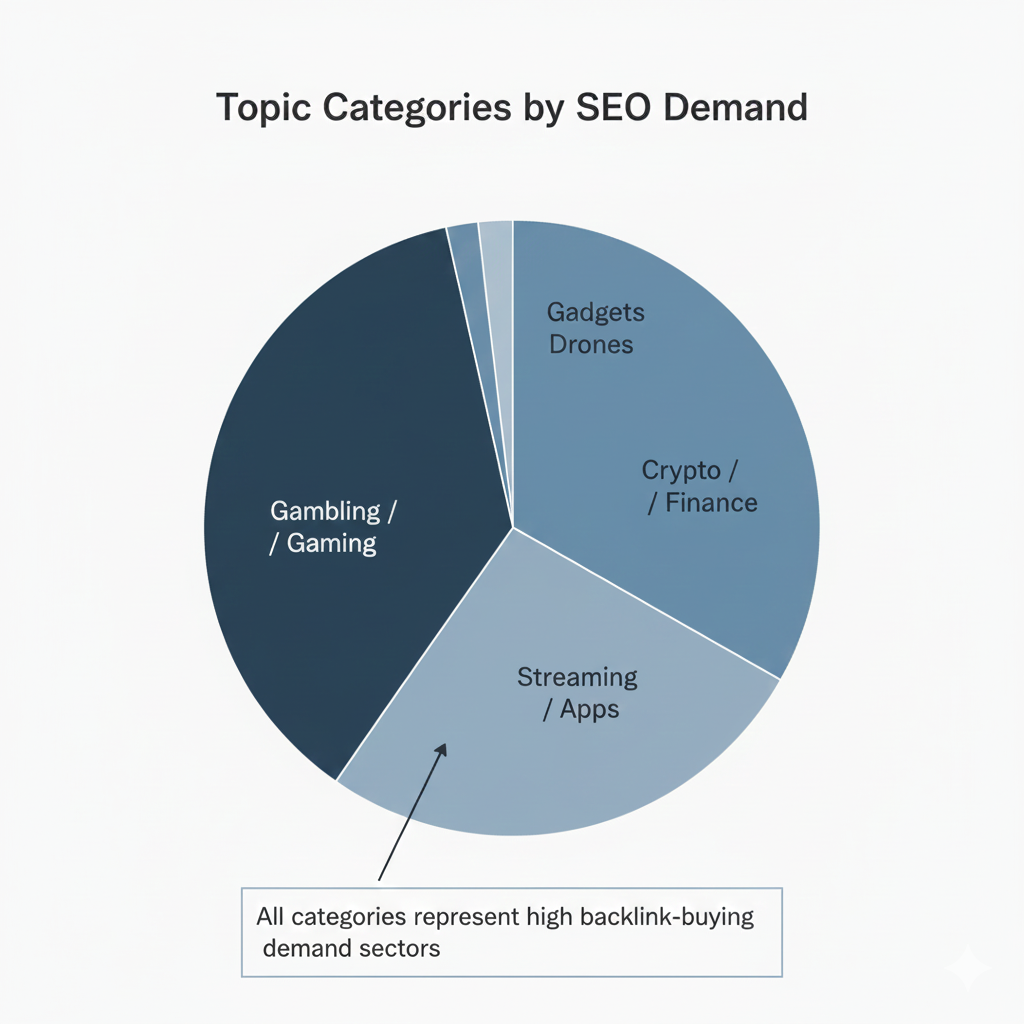
Tonztech.com publishes content about:
- Cybersecurity
- Gadgets
- Drones
- Streaming
- Online gaming
- Crypto-adjacent platforms
- Gambling-adjacent services
This mix is not reader-driven.
It is SEO-demand-driven.
These niches share one thing:
They are industries that aggressively buy backlinks.
That doesn’t make them illegitimate, but it reveals who the site is optimized to attract:
contributors, not readers.
Step 4: The Guest Content Pattern (What Repetition Reveals)
When I read multiple articles back-to-back, I noticed patterns that don’t show up in casual browsing:
- Similar article structures across unrelated topics
- Repeated “Top X” / “Best Y” frameworks
- Identical CTA placement styles
- Consistent outbound-link positioning
These are classic syndication-ready article formats, designed to be:
- Easy to write
- Easy to approve
- Easy to link from
- Easy to scale
This is not journalism.
It is content hosting at scale.
Step 5: Safety for Users vs Safety for Brands (Two Different Things)
This is where many analyses fail by collapsing two very different risks.
For ordinary visitors:
- No malware detected
- No deceptive scripts
- No forced downloads
- No credential harvesting
User safety risk: LOW
For businesses or brands:
- Content sits next to gambling / grey niches
- No editorial curation
- No reputational separation
- No contextual safeguards
Brand safety risk: MEDIUM to HIGH
The site is safe to visit but risky to associate with.
That distinction is crucial and often missed.
Step 6: Domain Age, Helpful but Misleading
Yes, Tonztech.com has been around for years.
That means:
- It is unlikely to be a fly-by-night scam
- It passes basic longevity checks
- It benefits from historical indexation
But age here functions as infrastructure, not reputation.
There is no evidence of:
- Investigative archives
- Editorial evolution
- Corrections over time
- Public accountability grew
So the domain’s age supports SEO mechanics, not trustworthiness.
Step 7: The Absence That Matters Most, No Editorial Bottleneck
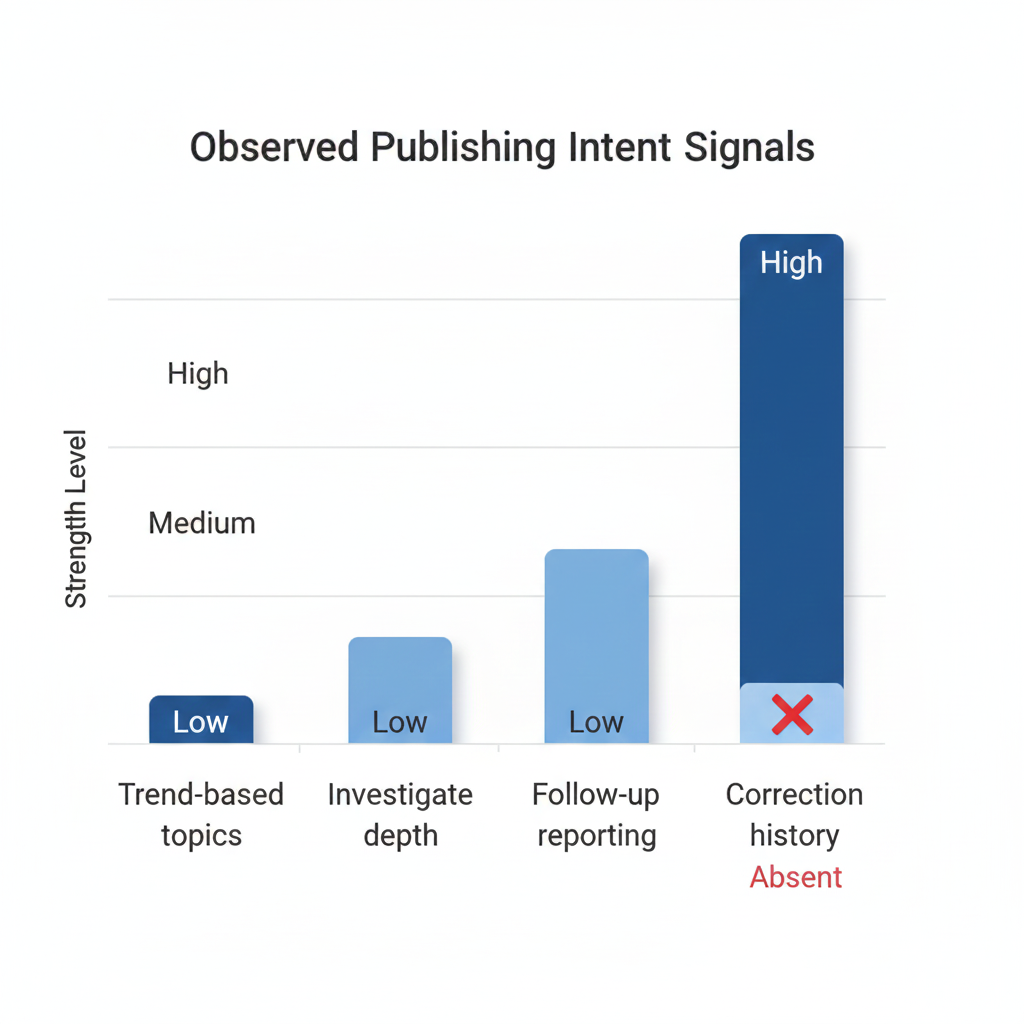
The single biggest red flag is not ads, links, or topics.
It’s this:
There is no visible bottleneck where content quality is enforced.
- No editor
- No standards
- No disclosures
- No corrections
- No responsibility trail
This means:
- Anything publishable is acceptable
- Accuracy is optional
- Consistency is accidental
For readers, this creates uncertainty.
For search engines, it creates fragility.
Step 8: What the Site Is Legitimate As (and What It Is Not)
Based on everything I observed, Tonztech.com is legitimately:
- A guest-post hosting platform
- An SEO link placement surface
- A content syndication endpoint
It is not legitimately:
- A tech journalism outlet
- A cybersecurity authority
- A trusted source for decision-making
- A reader-first publication
This is not a moral judgment.
It is categorical accuracy.
Step 9: My Personal Assessment (No Polishing)
If I encountered Tonztech.com organically as a reader, I would skim it and move on.
If I encountered it as a marketer, I would:
- Use it cautiously
- Never rely on it
- Never build strategy around it
- Expect diminishing value over time
If I encountered it as a business owner, I would not associate my brand with it publicly.
That conclusion isn’t based on suspicion, it’s based on structural intent.
And structure tells the truth faster than claims ever will.
Final Conclusion
After stripping away the design, the category labels, and the surface-level “tech blog” appearance, my view of Tonztech.com is very clear.
I don’t see a malicious website.
I don’t see a scam.
I also don’t see a publication that is genuinely built for readers.
What I see is a functional SEO utility site, one that exists primarily to host third-party content and outbound links on an aged, indexable domain. Its structure, topic selection, contribution model, and lack of editorial bottlenecks all point in the same direction: placement over publishing.
From a user-safety perspective, the site is fine. It loads cleanly, doesn’t push malware, and doesn’t try to deceive visitors at a technical level.
From a trust and credibility perspective, however, it falls short in almost every area that matters in 2025: transparency, accountability, sourcing discipline, and editorial ownership.
Personally, I would not treat Tonztech.com as:
- a reliable source of tech knowledge
- a reference-worthy publication
- a place where accuracy is actively protected
I would treat it as contextual noise, something that may explain what is being talked about online, but not what is true, important, or well-supported.
That distinction is critical. And it’s why expectations need to be set correctly.
My Rating (Separated by Risk Type)
This is not an overall star rating. It’s a risk-weighted classification based on how the site performs in different dimensions.
User Safety: ⭐⭐⭐⭐☆ (4/5)
Technically safe to browse. No malicious behavior observed.
Content Trustworthiness: ⭐⭐☆☆☆ (2/5)
Weak sourcing, no editorial accountability, heavy SEO intent.
Transparency & Accountability: ⭐☆☆☆☆ (1/5)
No ownership disclosure, no masthead, no responsible authority.
Authority as a Tech Source: ⭐☆☆☆☆ (1/5)
No credentials, no citations, no peer recognition.
Overall Classification:
Low-Trust Content Platform
That doesn’t make Tonztech.com “bad.”
It makes it limited, fragile, and easy to misinterpret if readers assume it functions like a real tech publication.
And in my experience, misunderstanding a site’s role is far more dangerous than the site itself.