Before I trust any unfamiliar content website, I ask one uncomfortable question first:
If the information here turns out to be wrong, misleading, or harmful, who is responsible?
Everything that follows is an attempt to answer that question for ItsNewzTalkies.com, using observable evidence rather than assumptions.
Initial Safety & Access Checks (What I Verified First)
Before reading content, I checked whether the site itself posed any direct technical risk.
Here is what I confirmed:
- HTTPS is enabled (valid SSL certificate)
- No forced redirects or deceptive pop-ups
- No malware warnings from browser or security tools
- Pages load consistently across desktop and mobile
- No fake login prompts or download traps
Conclusion at this stage:
The site is technically safe to visit. There is no indication of phishing, malware, or browser-level abuse.
This cleared the lowest bar. Safety alone, however, does not establish credibility, so I moved deeper.
Operational Reality: What the Site Actually Does
After navigating the site extensively, I found that ItsNewzTalkies.com is a content-only publishing operation.
It does not offer:
- Software tools
- Services
- Paid subscriptions
- Newsletters with editorial oversight
- Original research products
Every page ultimately exists to serve articles, and every article exists to capture attention and traffic.
This matters because content-only sites must rely on editorial transparency and sourcing discipline to earn trust. When those are weak, trust collapses quickly.
Domain Age & Maturity Risk
Public indicators suggest the site became active around mid-2025.
From a risk perspective, new domains carry inherent uncertainty:
- No historical correction record
- No long-term reputation trail
- No established accountability behavior
A new site is not untrustworthy by default, but it has not earned credibility yet. It must compensate with stronger transparency. This site does not.
That gap becomes visible when looking at how content is produced.
Publishing Pattern & Intent (Observed, Not Assumed)
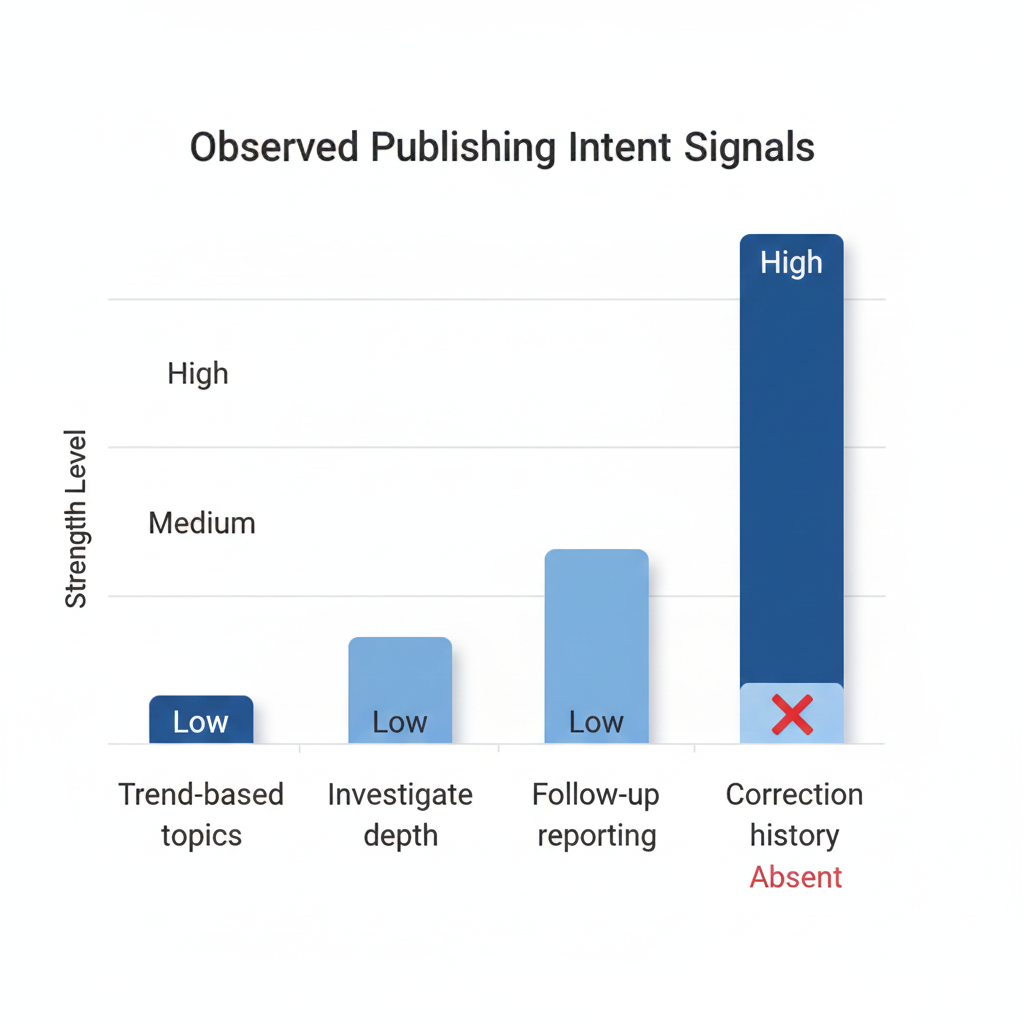
Across multiple days of observation, I noticed:
- Articles published regularly but irregularly
- Topics track trending searches and viral narratives
- No long-form follow-ups or investigative series
- No corrections or update history on older posts
This pattern aligns with SEO-responsive publishing, not editorial reporting.
It suggests the site’s priority is being discoverable, not being definitive.
Content Breadth & Expertise Dilution
The site publishes across:
- Tech
- Business
- Finance
- Health
- Lifestyle
- Beauty & Cosmetics
- Social Media
From a credibility standpoint, this is problematic.
Each of these domains requires separate expertise standards. Publishing across all of them without visible subject-matter credentials increases the probability of shallow or inaccurate coverage.
This isn’t about intent, it’s about structural risk.
Article Depth & Evidence Quality
While reading multiple articles fully, I intentionally looked for:
- Original data
- Primary source links
- Technical benchmarks
- Regulatory citations
- Firsthand testing language
What I mostly found instead:
- Summaries of existing narratives
- Simplified explanations
- Generic images
- Minimal outbound sourcing
This places the content in the category of secondary summaries, not primary information.
Readers are expected to trust the interpretation without seeing the underlying evidence.
Sourcing Behavior & Circular Reporting Risk
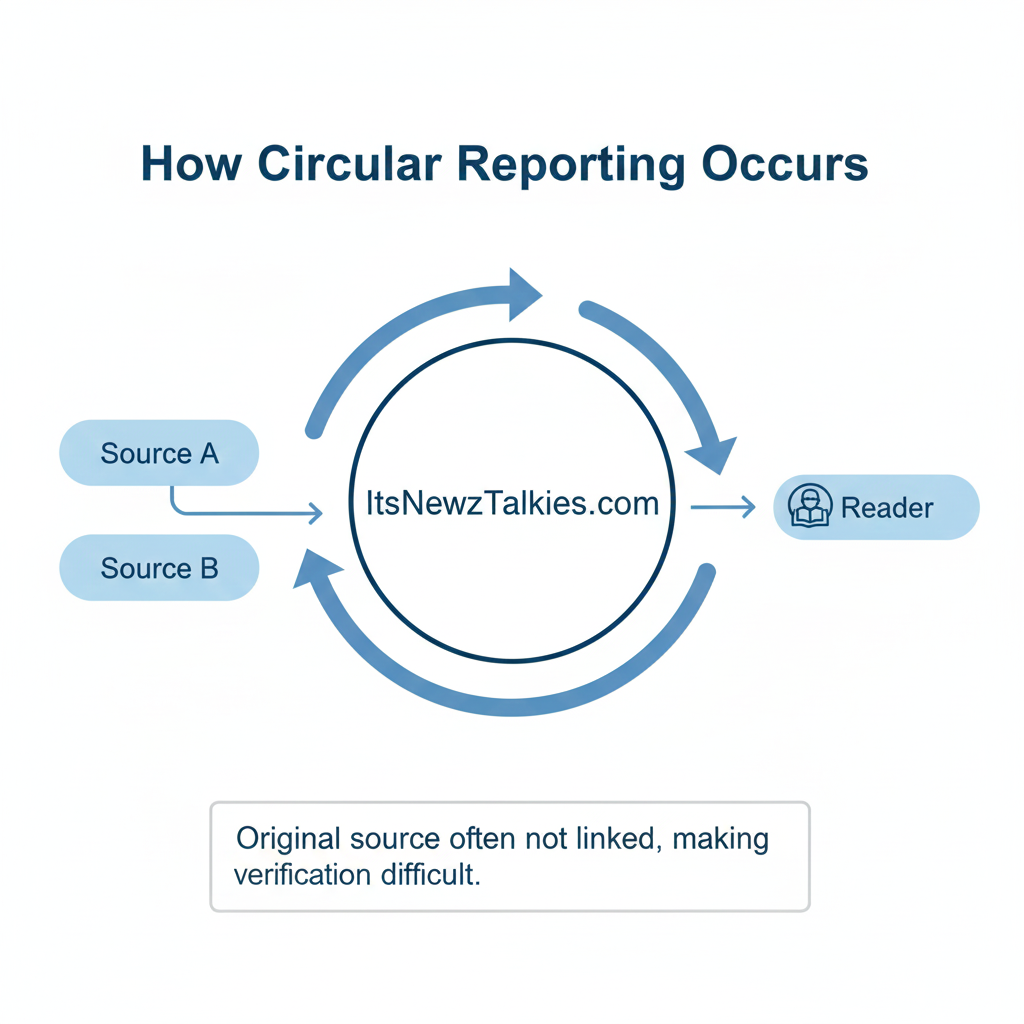
This is one of the most significant weaknesses.
Common patterns:
- References to “reports” or “experts” without links
- No citations to original publishers
- Claims that cannot be traced backward
This creates circular reporting, where:
- The site summarizes information already summarized elsewhere
- Original context and nuance are lost
- Errors propagate silently
From a trust standpoint, this is a high-impact limitation.
Author Transparency & Accountability Failure
Articles list author names, but those names:
- Do not link to bios
- Do not disclose expertise
- Do not link to professional profiles
- Do not establish accountability
There is also:
- No masthead
- No editor listing
- No ownership disclosure
In 2025, this is not neutral. It is a clear credibility failure.
About Page vs Verifiable Identity
The About page describes purpose, not responsibility.
Missing elements:
- Who owns the site
- Who funds it
- Who approves content
- What editorial standards exist
This prevents readers from assigning accountability.
Contact Information & Business Legitimacy
The site provides:
- A generic contact email
- No physical address
- No company registration information
This strongly suggests an informal, individual-level operation.
That does not imply fraud, but it places a ceiling on trust.
External Validation & Reputation Signals
I found:
- Minimal third-party references
- No citations from established media
- No meaningful discussion in forums or industry spaces
This absence suggests low authority, not controversy.
TRUST SIGNAL TABLE (Observed vs Missing)
| Trust Signal | Present | Missing | Impact |
| Named Authors | Yes | Bios, credentials | Medium risk |
| Editorial Masthead | No | Entirely missing | High risk |
| Company Identity | No | Ownership, registration | High risk |
| Corrections Policy | No | Entirely missing | Medium risk |
| External Citations | No | Authority validation | Medium-High risk |
RISK-WEIGHTED CREDIBILITY SCORE
This is not a rating. It’s a risk exposure model.
| Area | Risk Level | Why |
| Technical Safety | Low | Clean, stable site |
| Content Accuracy | High | Weak sourcing |
| Accountability | High | No editorial ownership |
| Authority | High | No credentials or citations |
| Transparency | High | No identity disclosure |
| Intent Clarity | Medium | SEO-driven publishing |
Overall Credibility Risk: High for factual reliance
Overall Safety Risk: Low for browsing
My Personal, Direct Take
After auditing everything, not skimming, not guessing, my conclusion is clear.
ItsNewzTalkies.com is not dangerous.
It is not a scam.
But it is also not trustworthy as an information authority.
I personally would:
- Read it casually
- Never cite it
- Always verify claims elsewhere
- Avoid relying on it for decisions involving money, health, or technical accuracy
This is not criticism, it’s classification based on missing trust signals.
And for readers, classification matters more than praise.